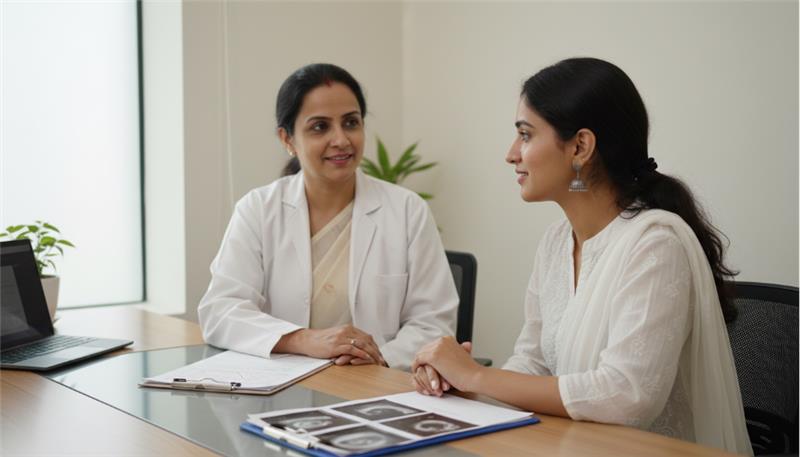
If you’ve ever had periods that weren’t regular, gained weight quickly, or had acne that wouldn’t go away, you might have looked online for answers. You might have heard the terms PCOS and PCOD before. They are often used to mean the same thing. A lot of people in India are confused about these conditions, and it’s thought that almost one in five women has them. They sound alike and have some of the same symptoms, but they are different health problems that can affect your long-term health in different ways.
Knowing the difference between PCOS and PCOD is the first step to taking good care of your health. You can get the right medical advice and tests if you know what’s going on in your body instead of worrying in silence. This is true whether your hormonal changes are small or you have a more serious metabolic syndrome.
Are PCOD and PCOS the Same?
No, the short answer is no. Both conditions affect the ovaries and cause some hormonal imbalance, but they are very different in terms of how bad they are and how they happen.
Polycystic Ovarian Disease (PCOD) is a medical condition in which the ovaries produce numerous eggs that are either underdeveloped or incompletely developed. These can turn into small cysts over time. PCOD is often caused by being overweight, being stressed, or making bad choices in your daily life. Most importantly, women with PCOD can still get pregnant with little help from doctors because their ovaries usually work well.
Polycystic Ovary Syndrome (PCOS) is a metabolic and endocrine disorder that is much more complex. PCOS causes a big hormonal imbalance that makes the ovaries make too many androgens, which are male hormones. This stops the eggs from growing or being released at all (anovulation). It is a “syndrome,” which means it affects a lot of different parts of the body. This often makes the body resistant to insulin, which raises the risk of long-term problems like heart disease and Type 2 diabetes.
If you’re trying to understand pcos vs pcod, the key difference is that PCOD mainly affects the ovaries, while PCOS affects the whole body’s hormonal and metabolic balance.
A Quick Look at How PCOS and PCOD Are Different
This is a simple comparison that should help you see the main differences:
| Feature | PCOD | PCOS |
| Full Form | Polycystic Ovarian Disease | Polycystic Ovary Syndrome |
| Kind of Condition | A problem with the ovaries | A complex endocrine/metabolic syndrome |
| Severity | Usually less severe and manageable | More serious; needs to be treated by a doctor |
| Hormonal Change | A slight imbalance in hormones | A lot more male hormones than usual |
| Impact on the Body | Affects the reproductive system the most | Changes how the body uses energy, the heart, and the skin |
| Fertility | Most of the time, you can get pregnant on your own | It can be harder to get pregnant |
| Prevalence | Very common in the general population | Not as common, but getting more common quickly |
This table gives a clear view of the difference between PCOS and PCOD for anyone comparing symptoms, fertility effects, and overall health risks.
Signs and Symptoms of PCOS and PCOD
Even though the two conditions have different medical profiles, they have a lot of symptoms in common that can make it hard for a patient to tell them apart without help from a doctor.
Common symptoms include:
- Irregular periods are often the first sign. You might miss a cycle or have very heavy bleeding.
- Changes in hormone levels can make the skin make more oil, which can lead to acne and oily skin.
- Even with exercise, it can be hard to lose weight, especially around the stomach.
- When the hair on the scalp gets thinner, it can look like male pattern baldness.
These shared signs are important when comparing pcos vs pcod symptoms, because both conditions can look similar at first.
More common symptoms of PCOS include:
People with PCOS often have symptoms that are more systemic, which means they affect the chemistry of the whole body. Women with PCOS may have a lot of insulin resistance, dark patches of skin called acanthosis nigricans, and severe hirsutism, which means too much hair growth on the face and body. People often ask pcod vs pcos which is serious, and the answer is that PCOS is usually thought to be more serious because it can affect metabolic health in ways that go beyond the ovaries.
If you want a deeper understanding of diagnosis and screening, you can also explore PCOS testing and health information.
How Doctors Tell if You Have PCOS or PCOD
It’s important to remember that there isn’t one test that can definitely show that you have these conditions. Instead, doctors use an exclusion strategy. This means that they look into other possible causes of these symptoms before making a final diagnosis.
A typical diagnostic path in India includes:
- Medical History: Talk about your periods and any that have been irregular in the past.
- Physical Exam: Checking for things like acne, hair growth, and high blood pressure.
- Blood Tests: These check your cholesterol, hormones, and how well your body can handle sugar.
- Ultrasound: A test that takes pictures of your ovaries to see if they are bigger than normal or if they look like a string of pearls because they have a lot of follicles.
Knowing how the PCOS diagnosis process works can help ease your worries if you see these signs. The first step in treating the root cause instead of just the symptoms is to get a professional test.
Is PCOD Worse Than PCOS?
People generally think PCOS is worse than PCOD, even though both need care. PCOS is a metabolic disorder, which is why this happens. This means that it changes how your body breaks down sugars and fats, especially insulin, which can lead to health problems in the long term.
Not taking care of PCOS can make it more likely that you may develop:
- Type 2 Diabetes
- High blood pressure or hypertension
- Endometrial cancer because not having regular periods makes the lining of the uterus thicker
- Diseases of the heart and blood vessels
People usually think of PCOD as a localized ovarian disorder, even though it can be annoying because it makes you gain weight and get acne. It doesn’t usually have the same high metabolic risks as PCOS, and it often reacts very quickly to small changes in how you live.
For anyone still wondering pcod vs pcos which is serious, PCOS is generally considered the more serious condition because of its long-term metabolic and hormonal complications.
How to Treat PCOS and PCOD
The good news is that you can handle both of these issues. The goal of pcos vs pcod treatment is to keep the symptoms under control and stop things from getting worse over time.
Changes to Your Way of Life
Lifestyle is the best way to handle both issues. Eating a lot of fiber and not a lot of refined sugars can help keep your insulin levels steady. Even just 30 minutes of brisk walking every day can help restore ovulation and balance hormones. A lot of people with PCOD can get their periods back on track by losing just 5% of their body weight.
Medical management
If changing your lifestyle isn’t enough, a doctor might suggest:
- Hormonal therapy to keep the menstrual cycle regular
- Metformin to help with insulin resistance and keeping your weight down
- Fertility drugs to help your ovaries work better if you want to get pregnant
- Skin treatments for acne or hair growth that is too fast
This is where understanding pcos vs pcod treatment becomes useful, because treatment plans may look similar at first but are often tailored depending on whether the issue is mainly ovarian or part of a broader metabolic syndrome.
You can also read more about PCOS tests and related health insights if you’re considering a professional evaluation.
Case Study Example: How a Patient Gained Clarity
This is just an example to show how a diagnosis works.
Neha, a 24-year-old IT worker in Bengaluru, noticed that she had gained 8 kg in six months without changing what she ate. Her periods got irregular, and sometimes they didn’t come for two months in a row. She thought she might have PCOD, so she tried some detox tea trends she found online. However, her acne only got worse.
She finally went to see a gynecologist. After a physical exam and a special blood test, her doctor found that she had high testosterone levels and insulin resistance. An ultrasound showed that the ovaries had many cysts. Neha had PCOS, not PCOD. By following a specific exercise plan and a low-GI diet, she was able to lose the extra weight and get her cycle back on track in eight months. Her story shows that guessing between the two can make it take longer to get the right treatment.
When Is It Time to See a Doctor?
If you think something is wrong with your body or your cycle, don’t wait. Finding out about a problem early on is important to avoid long-term health issues. You should see a specialist if:
- You haven’t had your period in three months or more
- You have gained weight quickly and for no reason
- Your acne is really bad, and creams that go on top of it don’t help
- You are having trouble getting pregnant
The first step to getting better is to learn how to diagnose PCOS. If you live in India and want to know more about your hormonal health, you can get checked through specialized testing panels. These panels give your doctor the information they need to make the right diagnosis.
FAQs
1. What is the main difference between PCOS and PCOD?
The difference between PCOS and PCOD is that PCOD is mainly an ovarian condition where immature eggs form small cysts, while PCOS is a more complex hormonal and metabolic disorder that affects the whole body.
2. PCOD vs PCOS which is serious?
When comparing pcod vs pc os which is serious, PCOS is usually considered more serious because it is linked with insulin resistance, fertility challenges, and long-term risks like diabetes and heart disease.
3. What are the common PCOS vs PCOD symptoms?
Some of the most common pcos vs pcod symptoms include irregular periods, weight gain, acne, hair thinning, and difficulty with ovulation. PCOS symptoms may also include excess facial hair and dark skin patches.
4. How does PCOS vs PCOD treatment differ?
Pcos vs pcod treatment may include lifestyle changes, exercise, weight management, and medical support. PCOS treatment often focuses more on insulin resistance and hormone control, while PCOD is often easier to manage with lifestyle correction.
5. How do I understand pcos vs pcod before diagnosis?
Understanding pcos vs pcod starts with knowing that both conditions affect hormones and ovaries, but PCOS is broader and more serious. A doctor usually confirms the diagnosis through symptoms, blood tests, and ultrasound.