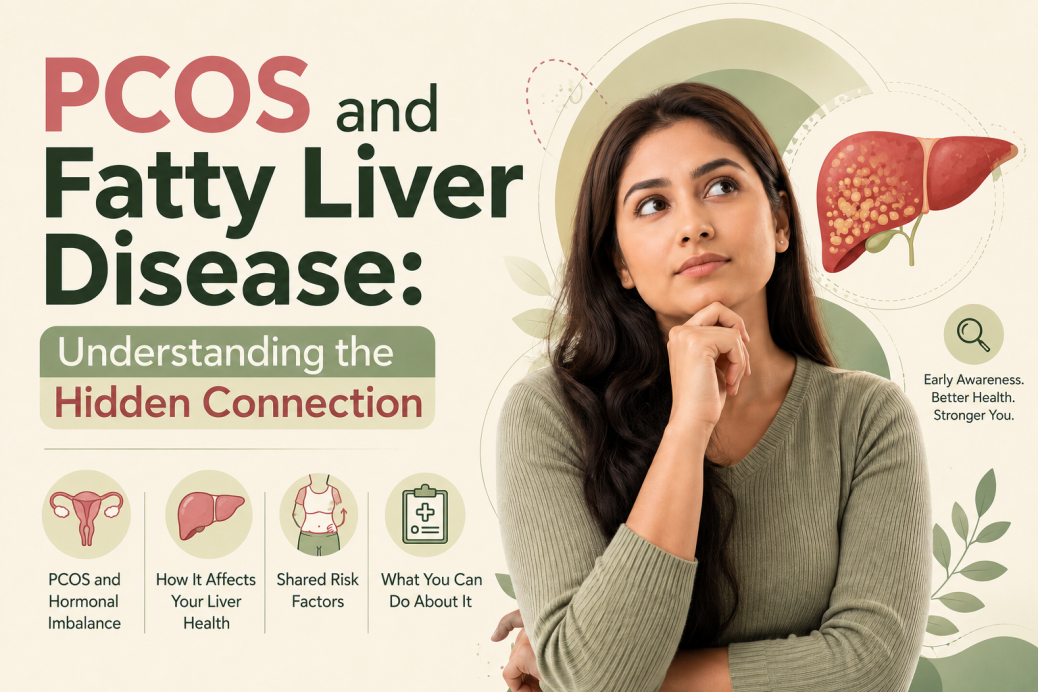
If you’re living with Polycystic Ovary Syndrome (PCOS), you’re probably used to talking about irregular periods, acne, or weight changes. But there’s another health concern that doesn’t get nearly enough attention: fatty liver disease.
Research shows that women with PCOS are significantly more likely to develop non-alcoholic fatty liver disease (NAFLD) than women without the condition. The good news? Understanding this connection early can help you take steps to protect your liver and your overall health.
This article breaks down what the science says about PCOS and fatty liver disease, why the two conditions are linked, and what you can do about it — all in plain, easy-to-understand language.
What Is Fatty Liver Disease?
Fatty liver disease, medically known as non-alcoholic fatty liver disease (NAFLD), occurs when excess fat builds up in the liver in people who drink little or no alcohol. A healthy liver contains a small amount of fat, but when fat makes up more than 5–10% of the liver’s weight, it’s classified as fatty liver.
In its early stages, NAFLD often causes no symptoms at all. Over time, however, it can progress to a more serious condition called non-alcoholic steatohepatitis (NASH), which involves liver inflammation and, in some cases, scarring (fibrosis) or cirrhosis.
Why Are PCOS and Fatty Liver Disease Connected?
The relationship between PCOS and fatty liver disease isn’t a coincidence — it comes down to shared underlying biology. Several studies published in journals affiliated with the Endocrine Society have found that women with PCOS have a higher prevalence of NAFLD compared to the general population, independent of body weight.
Here’s why the two conditions are so closely linked:
1. Insulin Resistance
Insulin resistance is one of the most common features of PCOS, affecting a large proportion of women with the condition. When the body’s cells don’t respond well to insulin, the pancreas produces more of it to compensate. This excess insulin can:
- Increase fat storage in the liver
- Promote fat production (a process called lipogenesis)
- Reduce the liver’s ability to break down fat efficiently
Over time, this creates the perfect environment for fat to accumulate in liver cells.
2. Elevated Androgens
PCOS is associated with higher levels of androgens (male hormones like testosterone), which are present in all women but often elevated in PCOS. Emerging research suggests that excess androgens may contribute to fat accumulation in the liver, though scientists are still studying the exact mechanisms involved.
3. Obesity and Body Fat Distribution
Not all women with PCOS are overweight, but many experience weight gain, particularly around the abdomen. Visceral fat (fat stored around internal organs) is metabolically active and closely linked to both insulin resistance and fatty liver disease.
4. Chronic Low-Grade Inflammation
PCOS is often associated with a state of chronic, low-grade inflammation in the body. This inflammation can affect liver function and contribute to fat buildup over time.
Symptoms of Fatty Liver in Women With PCOS
One of the tricky things about fatty liver disease is that it’s often silent, especially in the early stages. Many women don’t know they have it until it’s identified through routine blood work or imaging.
When symptoms do appear, they may include:
- Fatigue or low energy
- Mild discomfort or a feeling of fullness in the upper right abdomen
- Unexplained weakness
- In more advanced stages: jaundice (yellowing of the skin or eyes), swelling in the legs, or easy bruising
Because these symptoms are vague and can overlap with other PCOS-related issues, regular health check-ups are important for early detection.
How Is Fatty Liver Disease Diagnosed?
If you have PCOS, it’s worth talking to your healthcare provider about liver health, even if you feel fine. Diagnosis typically involves a combination of:
- Blood tests: Liver enzyme levels (ALT and AST) can indicate liver stress, though normal levels don’t always rule out fatty liver.
- Imaging tests: Ultrasound, FibroScan, or MRI can detect fat accumulation and assess liver stiffness.
- Liver biopsy: In some cases, this may be recommended to assess the extent of inflammation or scarring, though it’s not required for most diagnoses.
Your doctor may also evaluate your metabolic profile, including blood sugar, cholesterol, and triglyceride levels, since these often go hand in hand with fatty liver disease.
Managing PCOS and Fatty Liver Disease Together
The encouraging news is that both PCOS and fatty liver disease respond well to many of the same lifestyle strategies. Because insulin resistance is a shared root cause, addressing it can improve both conditions simultaneously.
Nutrition
A liver-friendly, PCOS-conscious diet generally emphasizes:
- Whole, minimally processed foods: Vegetables, fruits, whole grains, lean proteins, and healthy fats
- Reduced refined carbohydrates and added sugars: These can worsen insulin resistance and promote liver fat storage
- Healthy fats: Sources like olive oil, nuts, seeds, and fatty fish (rich in omega-3s) may support liver health
- Limited fried and highly processed foods: These are often high in trans fats, which are particularly hard on the liver
There isn’t a single “best diet” that works for everyone. A Mediterranean-style eating pattern has shown promising results in research for both PCOS and NAFLD, but working with a registered dietitian can help you build a plan suited to your individual needs.
Physical Activity
Regular exercise helps improve insulin sensitivity and can reduce liver fat, even without significant weight loss. Guidelines from major health organizations generally recommend:
- At least 150 minutes of moderate-intensity aerobic activity per week
- Strength training exercises at least twice a week
Even modest increases in physical activity have been associated with improvements in liver fat content in research studies.
Weight Management
For women who are overweight, even a modest weight loss of 5–10% of body weight has been shown in studies to meaningfully reduce liver fat and improve insulin sensitivity. Weight loss should always be approached gradually and sustainably, ideally with professional guidance.
Medical Treatment
There is currently no medication specifically approved to treat fatty liver disease, but your healthcare provider may address contributing factors, such as:
- Medications to improve insulin sensitivity, when appropriate
- Management of cholesterol or triglyceride levels
- Treatment of underlying PCOS symptoms
Suitability of any medication or supplement varies from person to person, so treatment decisions should always be made with a qualified healthcare provider.
Supplements
Some research has explored supplements such as vitamin E, omega-3 fatty acids, and inositol for liver and metabolic health in PCOS. Evidence is still evolving, and supplements should not replace medical care or lifestyle changes. Always consult your doctor before starting any new supplement.
Lifestyle Recommendations for Long-Term Liver Health
- Schedule regular check-ups that include liver function tests, especially if you have PCOS with insulin resistance
- Prioritize sleep, as poor sleep is linked to worsened insulin resistance
- Limit alcohol consumption, which places additional strain on the liver
- Manage stress, since chronic stress can affect hormone balance and metabolic health
- Stay consistent with movement and balanced meals rather than pursuing quick fixes
Key Takeaways
- Women with PCOS have a higher likelihood of developing non-alcoholic fatty liver disease (NAFLD), largely due to insulin resistance.
- Fatty liver disease often has no symptoms in its early stages, making regular screening important.
- Diet, exercise, and gradual weight management can improve both PCOS and liver health together.
- There’s no one-size-fits-all treatment — personalized care from a healthcare provider is essential.
- Early detection and lifestyle changes can help prevent progression to more serious liver conditions.
Frequently Asked Questions
1. Can PCOS cause fatty liver disease?
PCOS doesn’t directly cause fatty liver disease, but it significantly increases the risk due to shared factors like insulin resistance, elevated androgens, and inflammation.
2. How common is fatty liver disease in women with PCOS?
Studies suggest that women with PCOS have notably higher rates of NAFLD compared to women without PCOS, even when accounting for body weight.
3. What are the early signs of fatty liver in PCOS?
Early fatty liver disease often has no noticeable symptoms. When present, signs may include fatigue or mild abdominal discomfort. Blood tests and imaging are usually needed for detection.
4. How to reverse fatty liver with PCOS?
While “reversal” depends on the individual and disease stage, many people see improvement through sustained lifestyle changes such as a balanced diet, regular exercise, and gradual weight loss, alongside medical guidance.
5. What is the best diet for PCOS and fatty liver?
There’s no single best diet, but eating patterns rich in whole foods, fiber, lean protein, and healthy fats — such as a Mediterranean-style diet — while limiting refined sugars and processed foods, tend to support both PCOS and liver health.
6. Does insulin resistance cause fatty liver?
Insulin resistance is a major contributing factor to fatty liver disease. Excess insulin promotes fat storage and production in the liver, making it a key link between PCOS and NAFLD.
7. Can thin women with PCOS still get fatty liver disease?
Yes. While excess weight increases risk, fatty liver disease can occur in women with PCOS regardless of body size, particularly if insulin resistance is present.
8. What tests are used to diagnose fatty liver disease?
Common tests include liver enzyme blood tests, abdominal ultrasound, FibroScan, and occasionally liver biopsy for more detailed assessment.
9. Is fatty liver disease reversible?
In many cases, especially when caught early, fatty liver disease can improve significantly with lifestyle changes. Advanced stages involving scarring may be harder to reverse, which is why early detection matters.
10. Should I see a doctor if I have PCOS and I’m worried about my liver?
Yes. If you have PCOS, it’s worth discussing liver health with your healthcare provider, even without symptoms, so they can assess your individual risk and recommend appropriate screening.
Conclusion
The connection between PCOS and fatty liver disease is a reminder that PCOS affects far more than reproductive health — it’s a whole-body condition with wide-ranging metabolic effects. The encouraging part is that the same lifestyle changes that help manage PCOS symptoms, like balanced nutrition, regular movement, and maintaining a healthy weight, can also protect and support your liver.
You don’t have to navigate this alone. With the right information and support from a qualified healthcare provider, it’s entirely possible to manage both PCOS and liver health effectively.