Introduction
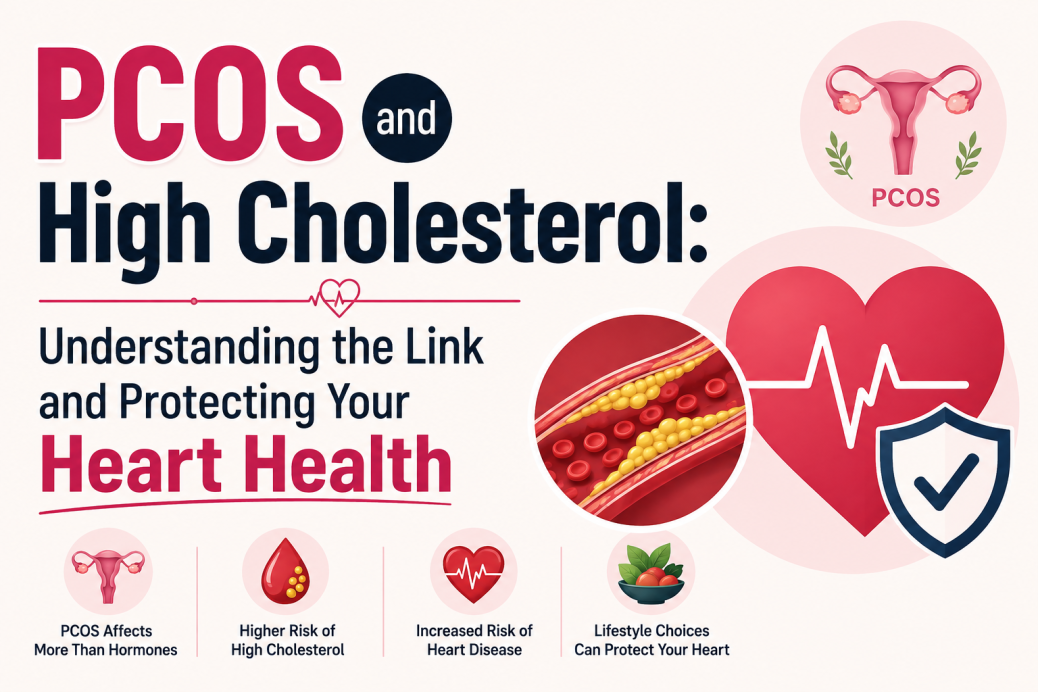
If you’ve been diagnosed with Polycystic Ovary Syndrome (PCOS), you’re probably used to hearing about irregular periods, acne, or weight changes. But there’s another side effect of PCOS that doesn’t get talked about nearly enough: its impact on your cholesterol levels.
Many women with PCOS are surprised to learn, often during a routine blood test, that their cholesterol numbers are outside the healthy range. This connection between PCOS and high cholesterol is well documented in medical research, yet it rarely takes center stage in conversations about the condition.
Understanding why PCOS affects cholesterol, what the numbers actually mean, and what you can do about it can help you take a proactive role in protecting your long-term heart health. This article breaks it all down in plain, simple language, so you leave with clarity, not confusion.
What Is PCOS, Briefly?
PCOS (Polycystic Ovary Syndrome) is a common hormonal condition that affects how the ovaries work. It’s associated with irregular ovulation, higher levels of androgens (sometimes called “male hormones,” though all bodies produce them), and, in many cases, insulin resistance — a state where the body’s cells don’t respond to insulin as effectively as they should.
Insulin resistance is often at the center of many PCOS-related health effects, including its influence on cholesterol. This is part of why PCOS is now widely understood not just as a reproductive condition, but as a whole-body metabolic condition as well.
Does PCOS Cause High Cholesterol?
This is one of the most common questions women with PCOS ask, and it deserves a clear, honest answer: PCOS doesn’t directly “cause” high cholesterol in a simple cause-and-effect way, but it significantly raises the risk of developing an unhealthy cholesterol profile.
Research has consistently shown that women with PCOS are more likely to experience a pattern of blood fat (lipid) abnormalities compared to women without the condition. This pattern is sometimes referred to as dyslipidemia in PCOS, which simply means an imbalance in the different types of fats circulating in the blood.
It’s important to understand this isn’t true for every woman with PCOS. Some have completely normal cholesterol levels. But because the underlying hormonal and metabolic changes of PCOS create conditions that favor unhealthy lipid patterns, screening and awareness matter more for this group.
Understanding PCOS Cholesterol Levels
To understand what’s actually happening, it helps to know the basics of cholesterol itself. Cholesterol isn’t inherently bad — your body needs it to build cells and produce hormones. Problems arise when the balance between different types shifts in an unhealthy direction.
Here’s a simple breakdown of what’s typically seen with PCOS and high cholesterol:
| Type of Fat in Blood | What It Does | Common Pattern in PCOS |
| LDL cholesterol (“bad” cholesterol) | Carries cholesterol to tissues; excess can build up in artery walls | Often elevated |
| HDL cholesterol (“good” cholesterol) | Helps remove excess cholesterol from the bloodstream | Often lower than ideal |
| Triglycerides | A type of fat used for energy storage | Often elevated |
| Total cholesterol | Sum of all cholesterol types | Can be elevated |
This combination — higher LDL, lower HDL, and higher triglycerides — is the pattern researchers most often describe when discussing LDL cholesterol PCOS concerns and overall lipid health in PCOS.
Can PCOS Increase Triglycerides?
Yes, elevated triglycerides are one of the more frequently observed lipid changes in women with PCOS, particularly those who also have insulin resistance or excess weight around the abdomen. Triglycerides are a type of fat the body uses for energy, and insulin resistance can interfere with how efficiently the body processes and clears them from the bloodstream. This is one reason healthcare providers often check a full lipid panel, not just total cholesterol, when evaluating PCOS-related metabolic health.
Why Does PCOS Affect Cholesterol? The Key Contributing Factors
Several interconnected factors help explain the relationship between PCOS and cholesterol:
1. Insulin Resistance
Insulin resistance is present in a large proportion of women with PCOS, regardless of body weight. When cells don’t respond well to insulin, the liver’s processing of fats can be affected, often leading to higher triglycerides and changes in LDL and HDL levels.
2. Elevated Androgens
Higher levels of androgens, common in PCOS, have been linked in research to shifts in lipid metabolism, including lower HDL cholesterol.
3. Weight and Body Composition
While PCOS affects women of all body sizes, many who carry excess weight — especially around the abdomen — may experience more pronounced insulin resistance, which in turn can worsen cholesterol patterns. This isn’t about blame; body composition is influenced by hormones, genetics, and many other factors beyond a person’s control.
4. Chronic Low-Grade Inflammation
Some studies suggest PCOS is associated with low-grade inflammation, which may also play a role in unhealthy lipid patterns, though research in this area is still evolving.
5. Genetics and Family History
Family history of high cholesterol or heart disease can compound PCOS-related risk, making individual screening especially important.
Why This Matters: PCOS Heart Health
The reason doctors pay close attention to PCOS heart health is that unhealthy cholesterol patterns, left unaddressed over many years, are a known contributor to cardiovascular disease risk. Women with PCOS are generally considered to have a higher long-term risk of cardiovascular concerns compared to women without the condition, which is why organizations such as the Endocrine Society and ACOG recommend regular cholesterol screening as part of PCOS care.
This doesn’t mean every woman with PCOS will develop heart disease. It means that awareness, monitoring, and healthy lifestyle habits are especially valuable tools for this group.
Diagnosis and Evaluation
If you have PCOS, your healthcare provider may recommend a lipid panel, a simple blood test that measures total cholesterol, LDL, HDL, and triglycerides. This is typically done:
- At the time of PCOS diagnosis
- Periodically thereafter (frequency depends on individual risk factors)
- Alongside other metabolic screenings, such as blood glucose or insulin testing
If your results show elevated LDL or triglycerides, or low HDL, your provider will consider your full health picture, including weight, family history, blood pressure, and blood sugar, before recommending next steps.
PCOS High Cholesterol Treatment: What Are the Options?
There’s no single “best” approach to managing cholesterol in PCOS, since suitability varies by individual. However, healthcare providers generally consider a combination of the following:
Lifestyle-Based Approaches
For many women, lifestyle changes are the first line of management and can meaningfully improve lipid profiles over time.
Medical Approaches
In some cases, especially where lifestyle changes aren’t enough or other risk factors are present, healthcare providers may discuss:
- Medications that help manage cholesterol levels
- Medications that improve insulin sensitivity, which may indirectly support healthier lipid levels
- Treatment of related conditions, such as high blood pressure or blood sugar irregularities
Any decision about medication should be made individually with a qualified healthcare provider, based on personal risk factors, other health conditions, and test results.
Best Diet for PCOS and High Cholesterol
While there’s no one-size-fits-all “PCOS diet,” several evidence-informed eating patterns are commonly recommended to support healthier cholesterol levels:
- Emphasize fiber-rich foods such as vegetables, fruits, legumes, and whole grains, which can help support healthy LDL levels.
- Choose healthy fats like those found in olive oil, nuts, seeds, and fatty fish, while limiting saturated and trans fats found in many processed and fried foods.
- Limit added sugars and refined carbohydrates, which can contribute to insulin resistance and elevated triglycerides.
- Include lean protein sources, such as poultry, fish, beans, and tofu.
- Stay mindful of portion sizes rather than following restrictive or extreme diets, which are not typically sustainable or necessary.
These are general educational guidelines. A registered dietitian familiar with PCOS can help tailor a nutrition plan to your specific needs and preferences.
How to Lower Cholesterol With PCOS: Lifestyle Recommendations
Alongside dietary changes, several lifestyle habits are commonly associated with improved lipid profiles:
- Regular physical activity: Most guidelines suggest aiming for at least 150 minutes of moderate-intensity exercise per week, which may help improve HDL and lower triglycerides.
- Maintaining a healthy sleep routine: Poor sleep has been linked to worsened insulin resistance, which can indirectly affect cholesterol.
- Managing stress: Chronic stress may influence hormone levels and eating patterns, so healthy coping strategies (like mindfulness, movement, or therapy) can be supportive.
- Avoiding smoking and limiting alcohol: Both can negatively affect cholesterol and overall cardiovascular health.
- Gradual, sustainable weight management (if recommended by your provider): Even modest changes in body weight have been associated with improvements in lipid profiles for some women with PCOS.
It’s worth noting that lifestyle changes take time, and progress isn’t always linear. Being patient and consistent matters more than perfection.
Key Takeaways
- PCOS is strongly associated with a higher risk of unhealthy cholesterol patterns, including elevated LDL and triglycerides and lower HDL.
- Insulin resistance, elevated androgens, and inflammation are among the key contributing factors.
- Regular cholesterol screening is recommended for women with PCOS.
- Lifestyle changes, including diet, exercise, sleep, and stress management, are foundational to managing cholesterol.
- Medical treatment may be appropriate for some women and should always be personalized.
- Managing cholesterol in PCOS is about long-term heart health, not short-term fixes.
Frequently Asked Questions
1. Does PCOS cause high cholesterol?
PCOS doesn’t directly cause high cholesterol in every case, but it’s associated with a higher likelihood of developing unhealthy cholesterol patterns due to insulin resistance and hormonal changes.
2. What cholesterol changes are most common in PCOS?
The most observed pattern includes elevated LDL cholesterol, elevated triglycerides, and lower HDL cholesterol.
3. Can PCOS increase triglycerides specifically?
Yes, elevated triglycerides are a frequently reported finding in women with PCOS, particularly those with insulin resistance.
4. How often should women with PCOS get their cholesterol checked?
This varies by individual risk factors, but many healthcare providers recommend cholesterol screening at diagnosis and periodically afterward. Your provider can advise on the right schedule for you.
5. Can losing weight improve cholesterol levels in PCOS?
For some women, gradual and sustainable weight changes have been associated with improved lipid profiles, though this isn’t the only factor and isn’t necessary for every woman with PCOS.
6. What is the best diet for PCOS and high cholesterol?
There’s no single required diet, but eating patterns rich in fiber, healthy fats, and lean protein, while limiting added sugars and processed fats, are commonly recommended.
7. Are cholesterol medications necessary for everyone with PCOS?
No. Medication decisions depend on individual test results, overall risk factors, and a healthcare provider’s assessment. Many women manage cholesterol through lifestyle changes alone.
8. Is high cholesterol in PCOS reversible?
Many women see meaningful improvements in their lipid profile through consistent lifestyle changes and, where appropriate, medical treatment. Individual results vary.
9. Does PCOS increase the risk of heart disease?
Research suggests women with PCOS may have a higher long-term cardiovascular risk, which is part of why monitoring cholesterol and metabolic health is recommended.
10. Can thin or lean women with PCOS also have high cholesterol?
Yes. Cholesterol changes in PCOS are linked to underlying hormonal and metabolic factors, not body weight alone, so lean women with PCOS can also experience dyslipidemia.
Conclusion
The link between PCOS and high cholesterol is a well-established but often overlooked part of managing this condition. Understanding that PCOS can influence LDL, HDL, and triglyceride levels empowers you to ask the right questions, request the right screenings, and make informed lifestyle choices that support your heart health over the long run.
You don’t have to navigate this alone. With the right information, consistent habits, and support from a qualified healthcare provider, managing cholesterol alongside PCOS is achievable.