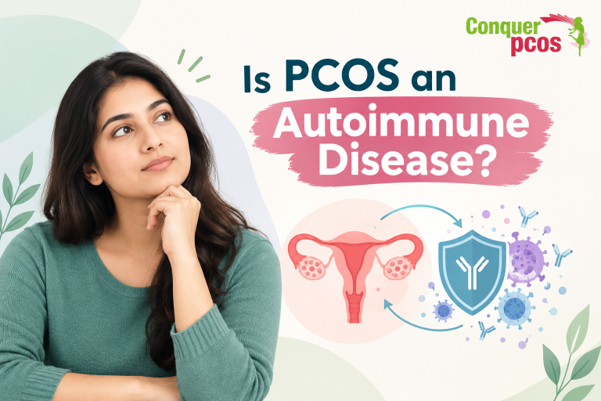
If you’ve been diagnosed with Polycystic Ovary Syndrome (PCOS), you may have come across claims online suggesting it’s an autoimmune disease. It’s an understandable question, especially since PCOS involves inflammation and immune system changes that overlap with some autoimmune conditions. But is PCOS actually classified as autoimmune?
The short answer, based on current medical understanding, is no. PCOS is classified as a hormonal and metabolic disorder, not an autoimmune disease. However, the relationship between PCOS, inflammation, and the immune system is more nuanced than a simple yes or no, and emerging research continues to explore these connections.
This article breaks down what PCOS actually is, how it differs from autoimmune diseases, what the immune system’s role might be, and what current research tells us, so you can separate fact from misconception.
What Is PCOS, Medically Speaking?
PCOS is a hormonal and metabolic condition that affects how the ovaries function. It’s one of the most common endocrine disorders in women of reproductive age. Key features often include:
- Irregular or absent menstrual periods
- Elevated levels of androgens (male hormones like testosterone)
- Polycystic ovaries visible on ultrasound (multiple small follicles)
- Insulin resistance, where the body doesn’t respond efficiently to insulin
PCOS is diagnosed based on a combination of these features, most commonly using the Rotterdam criteria, which requires at least two of the three core symptoms above, along with ruling out other conditions that could cause similar symptoms.
What Is an Autoimmune Disease?
To understand why PCOS isn’t classified as autoimmune, it helps to understand what autoimmune disease actually means.
An autoimmune disease occurs when the immune system mistakenly attacks the body’s own healthy cells and tissues, treating them as foreign invaders. Examples of autoimmune diseases include:
- Hashimoto’s thyroiditis
- Type 1 diabetes
- Rheumatoid arthritis
- Lupus
- Celiac disease
Autoimmune diseases are typically diagnosed through the presence of specific autoantibodies (proteins the immune system produces that target the body’s own tissue) and characteristic patterns of tissue damage.
So, Why Do People Ask If PCOS Is Autoimmune?
There are a few reasons this question comes up often, and they’re rooted in real, observed connections rather than pure myth.
1. Chronic Low-Grade Inflammation
Many women with PCOS have elevated markers of chronic, low-grade inflammation, such as C-reactive protein (CRP). This type of inflammation is different from the acute immune attacks seen in autoimmune disease, but it has led some to wonder whether immune dysfunction plays a role in PCOS.
2. Overlapping Symptoms With Autoimmune Thyroid Conditions
Research has found that women with PCOS may have a higher prevalence of Hashimoto’s thyroiditis, an autoimmune condition affecting the thyroid, compared to the general population. This has fueled some of the confusion, since the two conditions can coexist and share symptoms like fatigue, weight changes, and irregular periods.
3. Immune Cell Involvement
Some studies have observed differences in immune cell activity and cytokine levels (signaling molecules involved in inflammation) in women with PCOS. However, having altered immune markers is not the same as having an autoimmune disease, which specifically involves the immune system attacking the body’s own tissues.
What Does Current Research Say?
According to current medical understanding, including guidance reflected by organizations such as the Endocrine Society, PCOS is classified as a complex hormonal and metabolic disorder, not an autoimmune disease. There is no confirmed autoantibody or autoimmune mechanism that defines PCOS the way there is for conditions like lupus or Hashimoto’s thyroiditis.
That said, research into the immune system’s role in PCOS is ongoing and evolving. Some scientists are exploring whether chronic inflammation contributes to the development or progression of PCOS symptoms, or whether it’s more of a consequence of the hormonal and metabolic changes involved. This is an area of emerging research, and it’s important to note that findings are not yet conclusive enough to reclassify PCOS as an autoimmune condition.
Key Differences Between PCOS and Autoimmune Disease
| Feature | PCOS | Autoimmune Disease |
| Primary cause | Hormonal and metabolic imbalance | Immune system attacking healthy tissue |
| Diagnostic markers | Androgen levels, ovarian ultrasound, menstrual patterns | Specific autoantibodies, tissue-specific damage |
| Inflammation type | Chronic, low-grade | Often more targeted, tissue-specific |
| Classification | Endocrine/metabolic disorder | Immune-mediated disorder |
| Can they coexist? | Yes, PCOS can occur alongside autoimmune conditions like Hashimoto’s | N/A |
Can Women With PCOS Also Have Autoimmune Conditions?
Yes. Having PCOS does not rule out the possibility of also having an autoimmune disease, and in fact, some studies suggest a higher co-occurrence of autoimmune thyroid conditions in women with PCOS. This is why healthcare providers often recommend thyroid function testing as part of a broader evaluation when diagnosing or managing PCOS.
If you have PCOS and are experiencing symptoms like unusual fatigue, joint pain, hair thinning beyond typical PCOS-related shedding, or other unexplained symptoms, it’s worth discussing autoimmune screening with your doctor, since these conditions can sometimes overlap or be mistaken for one another.
Management and Evaluation
Because PCOS and autoimmune conditions are managed differently, an accurate diagnosis matters. A healthcare provider may recommend:
- Hormone panel testing: To assess androgen levels and rule out other hormonal causes.
- Thyroid function tests: Including antibody testing if autoimmune thyroid disease is suspected.
- Inflammatory markers: Such as CRP, to understand the broader inflammatory picture, though this alone doesn’t diagnose autoimmune disease.
- Pelvic ultrasound: To evaluate ovarian appearance as part of PCOS diagnostic criteria.
Suitability of specific tests and treatments varies by individual, so these evaluations should always be guided by a qualified healthcare professional.
Lifestyle Considerations for Managing Inflammation
While PCOS isn’t autoimmune, managing chronic inflammation may still support overall symptom management for many women. Some approaches that may help include:
- Anti-inflammatory eating patterns: Diets rich in vegetables, whole grains, and healthy fats have been associated with lower inflammatory markers in some studies.
- Regular physical activity: Exercise may help reduce insulin resistance and inflammation, though intensity and type should be tailored to individual needs.
- Stress management: Chronic stress can contribute to inflammation, so techniques like mindfulness or gentle movement may offer some benefit.
- Adequate sleep: Poor sleep has been linked to increased inflammatory markers and worsened insulin resistance.
These lifestyle factors are supportive strategies, not guaranteed treatments, and results can vary from person to person.
Key Takeaways
- PCOS is classified as a hormonal and metabolic disorder, not an autoimmune disease.
- Chronic, low-grade inflammation is common in PCOS, but this differs from the immune-targeted tissue attacks seen in autoimmune conditions.
- Women with PCOS may have a higher likelihood of also having autoimmune thyroid conditions like Hashimoto’s thyroiditis.
- Research into the immune system’s role in PCOS is ongoing, but current evidence does not support reclassifying PCOS as autoimmune.
- If you have PCOS and unexplained symptoms, discussing autoimmune screening with your doctor can help clarify the full picture.
Frequently Asked Questions
1. Is PCOS an autoimmune disease?
No. Based on current medical understanding, PCOS is classified as a hormonal and metabolic disorder, not an autoimmune disease.
2. Can PCOS be autoimmune in some cases?
Current research does not classify PCOS itself as autoimmune, though it can coexist with autoimmune conditions such as Hashimoto’s thyroiditis.
3. What autoimmune diseases are linked to PCOS?
Hashimoto’s thyroiditis is the autoimmune condition most commonly studied alongside PCOS, though research into other potential links is ongoing.
4. What’s the difference between PCOS and an autoimmune disease?
PCOS involves hormonal and metabolic imbalances, while autoimmune diseases involve the immune system mistakenly attacking healthy tissue. They are diagnosed and managed differently.
5. Why does PCOS cause inflammation if it’s not autoimmune?
Chronic low-grade inflammation in PCOS is thought to be related to insulin resistance and hormonal imbalances, rather than the immune system attacking the body’s own tissue.
6. Should women with PCOS get tested for autoimmune diseases?
If you have symptoms beyond typical PCOS signs, such as unusual fatigue or joint pain, your doctor may recommend autoimmune or thyroid testing to rule out overlapping conditions.
7. Does having PCOS increase the risk of autoimmune disease?
Some research suggests a higher co-occurrence of autoimmune thyroid conditions in women with PCOS, though PCOS itself is not considered a cause of autoimmune disease.
8. What is the latest research on PCOS and the immune system?
Ongoing studies are exploring the role of chronic inflammation and immune cell activity in PCOS, but current evidence has not established PCOS as an autoimmune condition.
9. Can inflammation from PCOS be managed?
Lifestyle approaches such as anti-inflammatory eating patterns, regular exercise, and stress management may help support overall inflammation levels, though results vary by individual.
10. Should I see a doctor if I think I have both PCOS and an autoimmune condition?
Yes. If you suspect you may have both conditions, a healthcare provider can run appropriate tests and help create a management plan tailored to your specific needs.
Conclusion
While PCOS shares some features with autoimmune conditions, such as chronic inflammation, current medical research classifies it as a hormonal and metabolic disorder rather than an autoimmune disease. Understanding this distinction can help you have more informed conversations with your healthcare provider, especially if you’re managing overlapping symptoms or considering additional testing. As research continues to evolve, staying informed through reliable, evidence-based sources remains one of the best ways to advocate for your own health.