Introduction
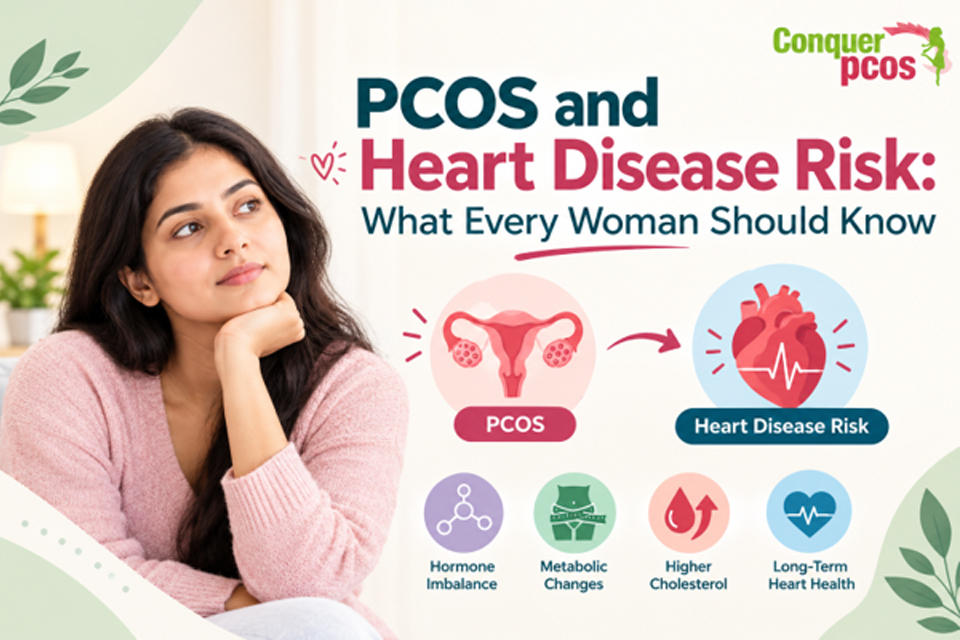
When most people think of Polycystic Ovary Syndrome (PCOS), they think of irregular periods, acne, or fertility challenges. Heart health rarely comes to mind. Yet research increasingly shows that PCOS heart disease risk is a real and important part of the overall picture of this condition.
This doesn’t mean every woman with PCOS will develop heart problems. It means that PCOS is linked to certain risk factors — like insulin resistance, high blood pressure, and unhealthy cholesterol — that, over time, can add up to a higher cardiovascular risk if left unmanaged.
The good news is that awareness is powerful. Understanding this connection early gives you the chance to take proactive steps, work with your healthcare provider, and protect your heart for the long run. Let’s break down what the science actually says, and what you can do about it.
What Is PCOS, Briefly?
PCOS is a common hormonal condition affecting how the ovaries function. It’s typically characterized by irregular ovulation, higher androgen levels, and, in many cases, insulin resistance — when the body’s cells don’t respond efficiently to insulin, the hormone that helps regulate blood sugar.
While PCOS is often classified as a reproductive condition, doctors now widely recognize it as a metabolic condition as well, one that can influence blood sugar, cholesterol, blood pressure, and, ultimately, cardiovascular health.
Does PCOS Increase Heart Disease Risk?
This is one of the most common questions women with PCOS ask their doctors, and current research suggests the answer leans toward yes, though with important nuance.
Multiple studies have found that women with PCOS tend to have a higher prevalence of cardiovascular risk factors compared to women without the condition. This includes patterns like insulin resistance, unhealthy cholesterol levels, higher blood pressure, and increased rates of a cluster of conditions known as metabolic syndrome.
It’s important to understand that having PCOS does not guarantee heart problems will develop. Rather, it means the underlying hormonal and metabolic changes associated with PCOS create a higher baseline risk, which is why proactive monitoring and healthy habits matter more for this group.
Can PCOS Cause Heart Problems? Understanding the Connection
To understand PCOS cardiovascular risk, it helps to look at the key contributing factors researchers have identified:
1. Insulin Resistance
Insulin resistance is present in a large proportion of women with PCOS, regardless of body weight. Over time, insulin resistance can contribute to higher blood sugar, unhealthy cholesterol patterns, and inflammation, all of which are recognized contributors to cardiovascular disease. This is why the relationship between insulin resistance and heart disease is such a central focus in PCOS research.
2. Unhealthy Cholesterol Patterns (Dyslipidemia)
Women with PCOS are more likely to experience a lipid pattern that includes elevated LDL (“bad”) cholesterol, elevated triglycerides, and lower HDL (“good”) cholesterol. Left unmanaged, this pattern is a well-established contributor to cardiovascular risk over time.
3. High Blood Pressure
Research suggests a link between PCOS and blood pressure, with some studies showing women with PCOS may be more likely to develop elevated blood pressure earlier in life compared to women without the condition. Blood pressure is one of the most significant modifiable risk factors for heart disease, which makes regular monitoring especially valuable.
4. Metabolic Syndrome
Metabolic syndrome in PCOS refers to a cluster of conditions — including abdominal weight gain, high blood pressure, high blood sugar, and unhealthy cholesterol — that together significantly raise cardiovascular risk. Studies suggest metabolic syndrome is more common among women with PCOS than in the general population.
5. Chronic Low-Grade Inflammation
Some research points to low-grade inflammation as another possible contributing factor in PCOS, which may play a role in blood vessel health over time. This is an area of ongoing study, and more research is needed to fully understand its impact.
6. Weight and Body Composition
PCOS affects women across all body sizes, but those who carry more weight, especially around the abdomen, may experience more pronounced insulin resistance and related cardiovascular risk factors. This isn’t about blame — body composition in PCOS is shaped by hormones, genetics, and many factors outside a person’s control.
Why PCOS Heart Health Deserves More Attention
Cardiovascular disease is one of the leading health concerns for women overall, and organizations such as the Endocrine Society and the American College of Obstetricians and Gynecologists (ACOG) recognize PCOS as a condition warranting closer cardiovascular monitoring. This includes regular screening for blood pressure, cholesterol, and blood sugar, ideally starting from the time of diagnosis.
The encouraging part of this picture is that many of the contributing risk factors, like blood sugar, cholesterol, and blood pressure, are modifiable through lifestyle habits and, when appropriate, medical treatment.
Diagnosis and Evaluation
If you have PCOS, your healthcare provider may recommend regular screening for cardiovascular risk factors, which can include:
- Blood pressure checks at routine visits
- Lipid panel (cholesterol and triglyceride testing)
- Blood sugar or insulin testing, to assess insulin resistance or prediabetes
- Weight and waist circumference measurements, which can help assess metabolic risk
- Discussion of family history, since a family history of heart disease can compound PCOS-related risk
These screenings are typically recommended at the time of PCOS diagnosis and periodically afterward, with frequency depending on individual risk factors.
How to Reduce Heart Disease Risk With PCOS
There’s no single approach that works for everyone, since suitability depends on individual health factors. However, healthcare providers generally recommend a combination of lifestyle strategies and, when appropriate, medical treatment.
Lifestyle-Based Approaches
For many women, lifestyle changes form the foundation of cardiovascular risk reduction in PCOS.
Medical Approaches
In some cases, particularly when lifestyle changes alone aren’t sufficient or other risk factors are present, healthcare providers may discuss:
- Medications to manage blood pressure
- Medications to manage cholesterol
- Medications that improve insulin sensitivity
- Ongoing monitoring for prediabetes or type 2 diabetes
Any decision about medication should be individualized, based on personal risk factors, other health conditions, and test results, in partnership with a qualified healthcare provider.
Heart Health Tips for Women With PCOS
The following evidence-informed lifestyle habits are commonly recommended to support cardiovascular health in PCOS:
- Eat a heart-supportive diet: Emphasize vegetables, fruits, whole grains, legumes, lean proteins, and healthy fats (like olive oil, nuts, and fatty fish), while limiting added sugars, refined carbohydrates, and foods high in saturated or trans fats.
- Move regularly: Most guidelines suggest aiming for at least 150 minutes of moderate-intensity exercise per week, which supports healthy blood pressure, cholesterol, and insulin sensitivity.
- Prioritize sleep: Poor sleep quality has been linked to worsened insulin resistance and blood pressure, so a consistent sleep routine can be supportive.
- Manage stress: Chronic stress can affect hormone levels, blood pressure, and eating patterns. Mindfulness, therapy, and other healthy coping strategies can help.
- Avoid smoking and limit alcohol: Both are well-established contributors to cardiovascular risk.
- Monitor your numbers: Keep track of blood pressure, cholesterol, and blood sugar with regular check-ups, so changes can be caught early.
- Consider gradual, sustainable weight management (if recommended by your provider): Even modest changes have been associated with improvements in several cardiovascular risk markers for some women with PCOS.
Progress with lifestyle changes often isn’t linear, and that’s completely normal. Consistency over time matters far more than perfection.
Key Takeaways
- PCOS is associated with a higher likelihood of cardiovascular risk factors, including insulin resistance, unhealthy cholesterol, high blood pressure, and metabolic syndrome.
- This doesn’t mean heart disease is inevitable with PCOS, but it does mean proactive monitoring is especially valuable.
- Regular screening for blood pressure, cholesterol, and blood sugar is recommended starting at diagnosis.
- Lifestyle habits, including diet, exercise, sleep, and stress management, form the foundation of risk reduction.
- Medical treatment may be appropriate for some women and should always be personalized.
- Managing PCOS with heart health in mind is about long-term prevention, not short-term fixes.
Frequently Asked Questions
1. Does PCOS increase heart disease risk?
Research suggests women with PCOS have a higher likelihood of developing cardiovascular risk factors, such as insulin resistance, unhealthy cholesterol, and high blood pressure, which can contribute to a higher long-term heart disease risk.
2. Can PCOS cause heart problems directly?
PCOS doesn’t directly cause heart disease in every case. Instead, it’s associated with risk factors that, if unmanaged over time, can raise the likelihood of cardiovascular issues.
3. What is metabolic syndrome, and how does it relate to PCOS?
Metabolic syndrome is a cluster of conditions, including high blood pressure, high blood sugar, unhealthy cholesterol, and abdominal weight gain, that together raise cardiovascular risk. It’s more commonly seen in women with PCOS than in the general population.
4. How does insulin resistance relate to heart disease?
Insulin resistance can contribute to elevated blood sugar, unhealthy cholesterol patterns, and inflammation, all of which are recognized contributors to cardiovascular disease over time.
5. Does PCOS affect blood pressure?
Some research suggests women with PCOS may be more likely to develop elevated blood pressure, sometimes at a younger age, compared to women without PCOS.
6. How can I reduce heart disease risk with PCOS?
A combination of a heart-supportive diet, regular physical activity, quality sleep, stress management, and regular health screenings can help. Medical treatment may also be appropriate for some women.
7. Do I need medication to protect my heart health with PCOS?
Not necessarily. Many women manage cardiovascular risk factors through lifestyle changes alone, though medication may be recommended for some based on individual risk factors and test results.
8. Can lean or thin women with PCOS also be at risk for heart disease?
Yes. Cardiovascular risk factors in PCOS are linked to underlying hormonal and metabolic changes, not body weight alone, so women with PCOS across all body sizes can be affected.
9. How often should women with PCOS get cardiovascular screening?
This depends on individual risk factors, but many healthcare providers recommend screening for blood pressure, cholesterol, and blood sugar at diagnosis and periodically afterward. Your provider can advise on the right schedule for you.
10. Is heart disease risk in PCOS reversible or preventable?
Many of the contributing risk factors, such as blood pressure, cholesterol, and blood sugar, are modifiable through lifestyle changes and, when appropriate, medical treatment, which means proactive management can meaningfully lower long-term risk.
Conclusion
The connection between PCOS and heart disease risk is an important, evidence-backed part of understanding this condition fully. While PCOS is associated with several risk factors for cardiovascular disease, including insulin resistance, unhealthy cholesterol, high blood pressure, and metabolic syndrome, this risk is not fixed or inevitable.
With regular screening, informed lifestyle choices, and support from a qualified healthcare provider, women with PCOS can take meaningful, proactive steps to protect their heart health for years to come.