
Sleep, Stress, and PCOS: Fixing Your Circadian Rhythm to Improve Insulin Sensitivity
The experience of symptoms such as irregular periods, stubborn weight gain, acne, and fatigue, all seemingly interconnected with PCOS, is not one that millions of women would want to go through ever again. They might be difficult for one to understand and control. Studies that examined the disturbance of the circadian rhythm and its connection to insulin resistance in PCOS gave us hope by pointing to the potential for natural remedies for the condition.
Understanding PCOS: More Than Just Reproductive Health
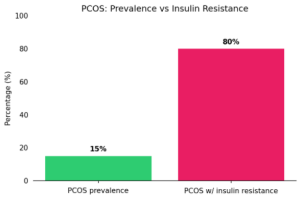
PCOS is undoubtedly one of the most common endocrine disorders with a prevalence of up to 15% in women of reproductive age. Traditionally, diagnosing PCOS has involved three criteria: irregular period, excess androgen activity (manifesting as PCOS acne and PCOS hair loss), and polycystic ovarian morphology. The disease, however, goes far beyond reproductive health.
The metabolic considerations of this condition are of utmost importance. Up to 80% of women with PCOS suffer from insulin resistance, precipitating a cascade of symptoms such as PCOS weight loss difficulty, the increased risk of diabetes, and continual tiredness. Insulin resistance is a problem not only with blood sugar; it also amplifies androgen production, thus placing a heavier burden on PCOS symptoms like hirsutism and putting them into a series of trials that other modes of PCOS treatment seem to rarely break.
What is quite fascinating is the newly emerging association between PCOS causation and circadian rhythm disruption. Women with PCOS tend to have altered sleep patterns, high evening cortisol, and altered melatonin output-the very features of a misaligned biological clock.
The Hidden Connection: How Sleep Disruption Fuels PCOS
The circadian rhythm found in our bodies is a 24-hour ticking clock that governs everything from hormone production to metabolic activity. Considering this, an irregular circadian rhythm through disturbed sleep schedule, going to sleep too late, or chronic stress sets forth a perfect scenario for the inception and progression of PCOS.
Anyhow, recent data shows that women with late chronotypes are at higher risk for PCOS and have increased testosterone levels. The sleep midpoint is after 4:00 AM among the strongest associations with PCOS symptoms, whereas the morning types have better metabolic profiles and lower levels of androgens.
The style is cumbersome and convoluted: circadian disruption acts directly on the core-clock genes in insulin-responsive metabolic tissues and ovaries to modify insulin sensitivity and hormone production. Late bedtimes bring about elevated androgens but less lean mass—the very tissue that drops in glucose uptake and insulin sensitivity.
Stress compounds this problem through HPA axis dysregulation. Chronic stress elevates evening cortisol levels, promoting central fat deposition and worsening insulin resistance. So, a poor sleep creates a condition of stress hormones that disrupts sleep quality even further and metabolic function.
The Insulin Sensitivity Connection: Why Timing Matters
Insulin sensitivity just happens to climb higher in the mornings and lower toward nighttime. And this biological rhythm has its purpose; it falls in line with ancestral eating and activity patterns. Modern lifestyle disruptions can hugely interfere with this natural rhythm.
When circadian rhythms are out of alignments, desynchronization occurs in peripheral clocks: liver, adipose tissue, and skeletal muscle become out of sync with the central clock in the brain. Such desynchronization impairs glucose disposal, decreases insulin sensitivity, and causes inflammation; these are all factors behind PCOS pathology.
The ovaries possess their own circadian clock machinery that controls the development of follicles and hormone production. Disrupted expression of clock genes in ovarian tissue correlates with increased LH levels, testosterone production, and ovulatory dysfunction- all key features of PCOS.
Evidence-Based Circadian Interventions for PCOS
The positive side is that several circadian rhythm interventions show promise as somewhat innocuous means of raising PCOS management. These are staying in sync with your inner clock through the natural light-dark cycle and scheduling your meals, workout, and sleep around that.
Key practical strategies:
- Sleep Optimization
- Wake up every day at the same time, with a target of 7 to 9 hours of sleep.
- Gradually move the bedtime earlier in 15 to 30-minute steps until a final sustainable window is created, preferably from 10:00 PM to 7:00 AM.
- Such a practice keeps the circadian rhythm in place and encourages insulin sensitivity.
- Light Management
- Stay out in the bright light for 10 to 30 minutes and make sure it is within 1 hour of your waking time.
- Together, the morning light exposure resets the circadian clock and enhances melatonin secretion in the evening.
- Ultimately, use warm lighting and screen filters and keep bright and blue light away from you at least 2-3 hours before sleep.
- Circadian Nutrition
- 10-12-hour daytime window for time-restricted eating, avoiding meals late at night.
- It is better to consume more calories earlier in the day, while the insulin sensitivity is higher, and the last meal should be light and early.
- Glucose metabolism often gets a major boost with this method aiding the weight loss efforts in PCOS.
- Strategic Exercise Timing
- Shun evening workouts and embrace the morning or early afternoon because of circadian gene expression impacted by exercise timing.
- Put in particular with a focus of resistance training for mins-2x/week to build and maintain lean muscle mass-for insulin sensitivity.
- Stay away from heavy trainings in the evening since they might hamper sleep onset.
Integrating Circadian Health with Comprehensive PCOS Care

While circadian treatment is powerful, the best results are achieved when it is combined with a multi-pronged management strategy for PCOS. The PCOS diet needs to focus on anti-inflammatory whole-food patterns such as the Mediterranean style of eating, which is rich in fiber and protein and helps to maintain blood sugar levels throughout the day.
PCOS supplements like inositol, vitamin D, and omega-3 fatty acids might support insulin signaling and reduce inflammation if taken with circadian interventions. Complementary modalities such as yoga and mindfulness for PCOS provide stress reduction in conjunction with windowed evening activity that aids sleep induction.
Enhancing circadian health amongst women experiencing PCOS-related infertility may cause oocyte quality to improve and consequently higher treatment success rates. With markers such as sleep quality and timing also associated with reproduction, circadian alignment enters the realm of interventions in fertility treatment protocols.
Home treatment for PCOS would be oriented according to environmental factors: keep the bedroom cold, dark, and silent; and set time to wind down. Loud snoring coupled with daytime sleepiness would be signs to consider a sleep study and an intervention for sleep apnea, whereby CPAP in return would drastically reduce insulin resistance.
Practical Implementation: Your Circadian PCOS Action Plan
The approach may vary depending on building your circadian health routine from a few up:
- Weeks 1-2: Wake up at an exact time, keep this walk outdoors in sunlight
- Weeks 3-4: Keep light low and eyes dim at night and go to bed early
- Weeks 5-6: Set meal timings according to circadian rhythm
- Weeks 7-8: Exercise timing and stress management practiceselection

Track your progress with fluctuations in cycle-regularity, energy level, sleep, and metabolic markers. Most women notice changes in PCOS symptom presentation within eight to twelve weeks of consistent circadian intervention.
Always keep in mind: PCOS self-care is a journey, not a destination. Even though circadian interventions hold much power, you certainly need to craft a full treatment plan with your healthcare providers-a plan that truly responds to your needs and goals.
The threading of sleep, stress, and PCOS is an exciting arena in womens health. Use the power of your circadian rhythm to take charge in the management of PCOS and improve your overall quality of life. Your inner clock may well turn out to be the key to renewed health and vitality.
For Diagnosis visit – https://www.metropolisindia.com/pcos