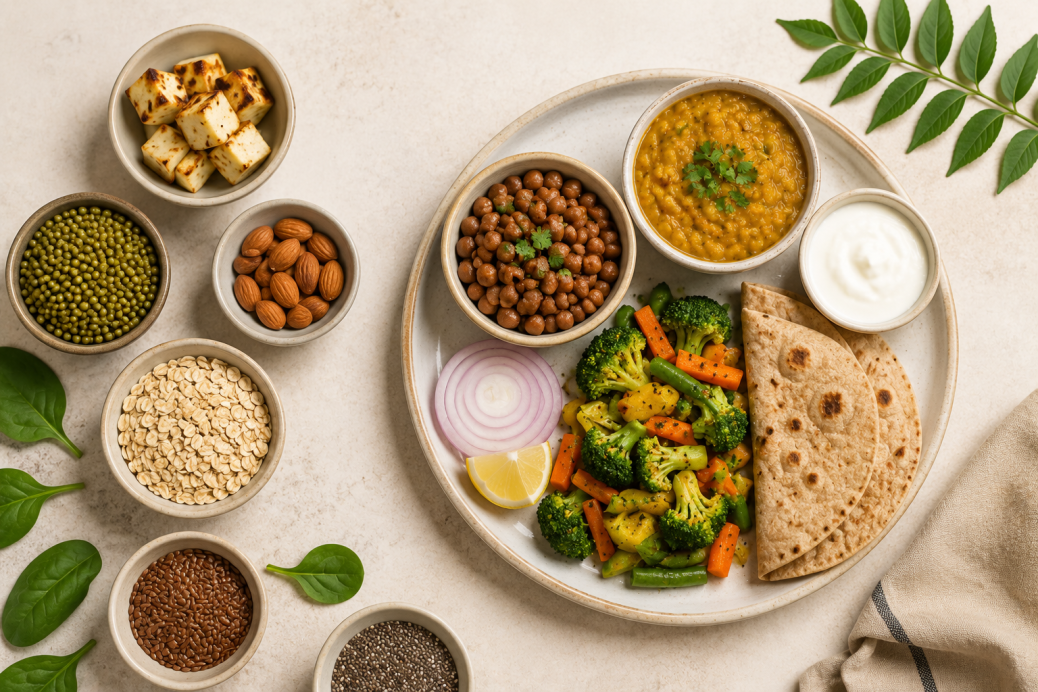
If you have recently been diagnosed with PCOS, you have likely been told that diet matters. But rarely does anyone explain which nutrients matter — and why. Two of the most clinically studied are protein for hormonal balance and fiber for hormones. Together, they target the central hormonal driver of PCOS: the relationship between insulin resistance and androgen excess.
Why Hormonal Imbalance Happens in PCOS
PCOS is fundamentally a metabolic and hormonal disorder. For most women, the root driver is insulin resistance.
When cells resist insulin, the pancreas compensates by producing more of it. Elevated insulin then directly signals the ovaries to overproduce androgens — particularly testosterone. Androgens at high levels cause three main effects:
- Blocking ovulation
- Disrupting menstrual cycles
- Producing symptoms such as acne, facial hair growth, and scalp hair loss
The 2023 research published in Frontiers in Endocrinology shows a direct connection between insulin resistance and androgen excess. Studies estimate that 50–70% of women with PCOS have measurable insulin resistance — including those with a normal BMI.
This is why how to balance hormones naturally is not simply about eating less or eating clean. It is about reducing insulin spikes so the androgen-production cycle is interrupted at its source.
Benefits of a High Protein Diet for PCOS Hormonal Balance
Protein slows carbohydrate absorption, blunts the post-meal insulin spike, and encourages a steadier blood sugar response. This is exactly how protein helps PCOS — by reducing insulin levels that trigger androgen overproduction.
A well-structured high protein diet for PCOS plays a critical role in improving insulin sensitivity and restoring hormonal balance.
What Research Says
- A 2024 meta-analysis found:
- Reduced fasting insulin by 2.69 μIU/mL
- Reduced HOMA-IR by 0.41 points
- A 12-week clinical trial showed improved insulin sensitivity and reduced inflammation markers
Recommended Intake
- 25–30% of daily calories from protein
- Roughly 80–100g per day
Best High-Protein Indian Foods for PCOS
| Food | Protein (per 100g cooked) | Notes |
| Paneer (low-fat) | 18g | Pair with fiber-rich vegetables |
| Chicken breast (grilled) | 27g | Lean; minimal saturated fat |
| Soya chunks | 52g (dry) | Concentrated plant protein |
| Eggs | 13g | Complete amino acid profile |
| Moong / masoor dal | 9–11g | High in fiber too |
| Rajma | 9g | Protein + fiber |
| Greek yogurt / hung curd | 10g | Supports gut health |
| Tofu | 8g | Plant-based option |
Fiber Rich Foods for PCOS: The Hormone–Gut Connection
The role of fiber for hormones goes far beyond digestion. It directly impacts insulin levels and androgen activity, making it essential for PCOS management.
1. Blood Sugar Regulation
Soluble fiber slows glucose absorption, which highlights the key fiber benefits for insulin resistance — reducing blood sugar spikes and lowering insulin levels.
2. Hormonal Regulation via SHBG
Fiber increases SHBG (Sex Hormone Binding Globulin), which binds excess testosterone and reduces its activity.
This is why including fiber rich foods for PCOS is essential for managing symptoms naturally.
Daily Fiber Target
- 25–40g per day
Best Fiber-Rich Indian Foods for PCOS
| Food | Fiber (per 100g) | Notes |
| Flaxseeds | 27g | Supports estrogen balance |
| Chia seeds | 34g | Easy to add to meals |
| Rajma / chickpeas | 6–8g | Also high in protein |
| Oats | 4g | Improves insulin sensitivity |
| Ragi | 3.6g | Low GI; high calcium |
| Moong dal with skin | 7.6g | Highly PCOS-friendly |
| Spinach | 2.2g | Supports iron levels |
| Broccoli / cauliflower | 2–3g | Supports hormone metabolism |
How to Balance Hormones Naturally: Combining Protein and Fiber
If you are wondering how to balance hormones naturally, the answer lies in combining both nutrients.
Protein and fiber are more effective together than either alone:
- Protein slows insulin secretion
- Fiber slows glucose absorption
Together, they create a stable blood sugar response — essential for hormonal balance in PCOS.
Ideal Plate Composition
- 30% protein (dal, paneer, eggs, curd, lean meat)
- 40% complex carbs and fiber (millets, legumes, vegetables)
- 30% healthy fats (nuts, seeds, ghee in moderation)
A high protein diet for PCOS combined with fiber rich foods for PCOS is the most evidence-supported approach to improve insulin sensitivity and hormonal health.
When to Get Your Hormones Tested
Diet changes take 8–12 weeks to show measurable improvements.
Recommended Tests:
- Fasting insulin and HOMA-IR
- Total and free testosterone
- SHBG
- LH:FSH ratio
- Fasting glucose and HbA1c
Frequently Asked Questions
Q1. How does protein help with PCOS?
How protein helps PCOS is by slowing carbohydrate absorption and reducing insulin spikes. Lower insulin levels reduce androgen production over time.
Q2. What are the best fiber-rich foods for PCOS in India?
Some of the best fiber rich foods for PCOS include ragi, oats, rajma, moong dal, flaxseeds, chia seeds, broccoli, and spinach.
Q3. Can fiber reduce androgen levels naturally?
Yes. Fiber for hormones works by improving insulin sensitivity and increasing SHBG, which lowers free testosterone.
Q4. How much protein is needed daily?
A high protein diet for PCOS typically includes 80–100g of protein per day.
Q5. Which hormone tests should PCOS patients get?
Fasting insulin, HOMA-IR, testosterone (total & free), SHBG, LH:FSH ratio, fasting glucose, and HbA1c.
Conclusion
Balancing PCOS hormones doesn’t have to be complicated. Focus on adding protein for hormonal balance and fiber for hormones to your daily meals. A simple mix of a high protein diet for PCOS and fiber rich foods for PCOS can make a real difference over time. If you’re looking at how to balance hormones naturally, consistency is what truly works.
Get Tested Today
Start by understanding your body. Book your PCOS tests with Metropolis Healthcare today.